

Close Menu
Daily NewsDaily News
    Pages
    • Home
    • About
    • Meet the Daily News Team
    • Contact
    • Terms and Conditions
    • Privacy Policy
    Facebook X (Twitter) Instagram
    Facebook X (Twitter)
    Daily NewsDaily News
    Subscribe
    • News
    • Entertainment
    • Finance
    • Health
    • Lifestyle
    • UK Politics
    • Property
    • Technology
    • Travel
    • World
    Daily NewsDaily News
    Home » Latest » Bessent Iran economic isolation: the tools, the risks and the China problem
    News

    Bessent Iran economic isolation: the tools, the risks and the China problem

    Philip MarchettiBy Philip Marchetti17/08/20263 Mins Read
    Facebook Twitter Pinterest LinkedIn Tumblr Email Reddit WhatsApp Copy Link
    Bessent Iran economic isolation
    Share
    Facebook Twitter LinkedIn Pinterest Email Reddit WhatsApp Copy Link

    The push for Bessent Iran economic isolation faces a central obstacle: almost every remaining pressure point risks damaging US economic interests or inflaming the standoff with Beijing.

    That is the verdict of Bloomberg Economics analyst Chris Kennedy, who said that unless the White House treats the Iran threat as its overriding priority above China, “it’s unlikely any action they take is going to materially change Iran’s calculus.”

    China’s grip on Iranian oil exports

    China buys more than 90% of Iran’s oil exports, making Beijing’s behaviour the decisive variable in any isolation strategy. CM Trade Law puts China’s share at 89% of all Iranian oil sales, with the remainder going to Syria, the UAE and Venezuela.

    The scale of that dependency is underscored by output data. Iranian petroleum exports reportedly hit a record in the first quarter of 2024, with “almost all” going to China, according to the Congressional Research Service, and they remained high into early 2025 despite some reported disruptions.

    Washington has already sanctioned some Chinese teapot refineries since the US began its pressure campaign against Iran in late February, but has stopped short of targeting the major Chinese banks that finance the trade.

    Hitting those banks would directly reduce Tehran’s oil revenues. The risk is that doing so could worsen tensions with Beijing ahead of a planned meeting between President Donald Trump and Chinese leader Xi Jinping. There is also a market consequence: removing discounted Iranian crude would lift already elevated global oil prices.

    In May, China ordered domestic companies not to comply with US sanctions on five refiners, while its biggest banks were caught between Beijing’s directive and the risk of losing access to the US financial system.

    Exchange houses, shadow fleets and overseas assets

    Once Iran makes its oil sales, it needs exchange houses and intermediaries to convert payments, often received in Chinese yuan, into usable currencies. US Treasury has already sanctioned some Iranian exchange houses as part of what it calls the “Economic Fury” campaign, accusing them of helping launder billions of dollars in foreign currency.

    Cutting off individual exchange houses will likely push transactions toward new intermediaries, currencies or digital assets rather than stopping them altogether. Iran has spent years building alternative channels outside the formal financial system.

    A broader option would be secondary sanctions threatening any entity doing even limited business with Iran, similar to the approach Trump took toward North Korea in 2017. That would force foreign companies and banks to choose between Tehran and access to the US financial system, putting pressure on Russia and China but also on US partners such as Turkey that maintain significant commercial ties with Iran.

    Trump has already floated a version of this, threatening 25% tariffs on countries conducting business with Iran. He has not yet followed through.

    On assets, the US could go beyond freezing Iranian government funds and attempt to confiscate assets already under US jurisdiction, drawing on a step the Bush administration took after the 2003 invasion of Iraq. The pool of Iranian state assets within direct US reach may be limited, however, and confiscation would be legally and diplomatically more complicated than a freeze. Much of Iran’s overseas wealth sits in third countries, requiring foreign government cooperation to seize.

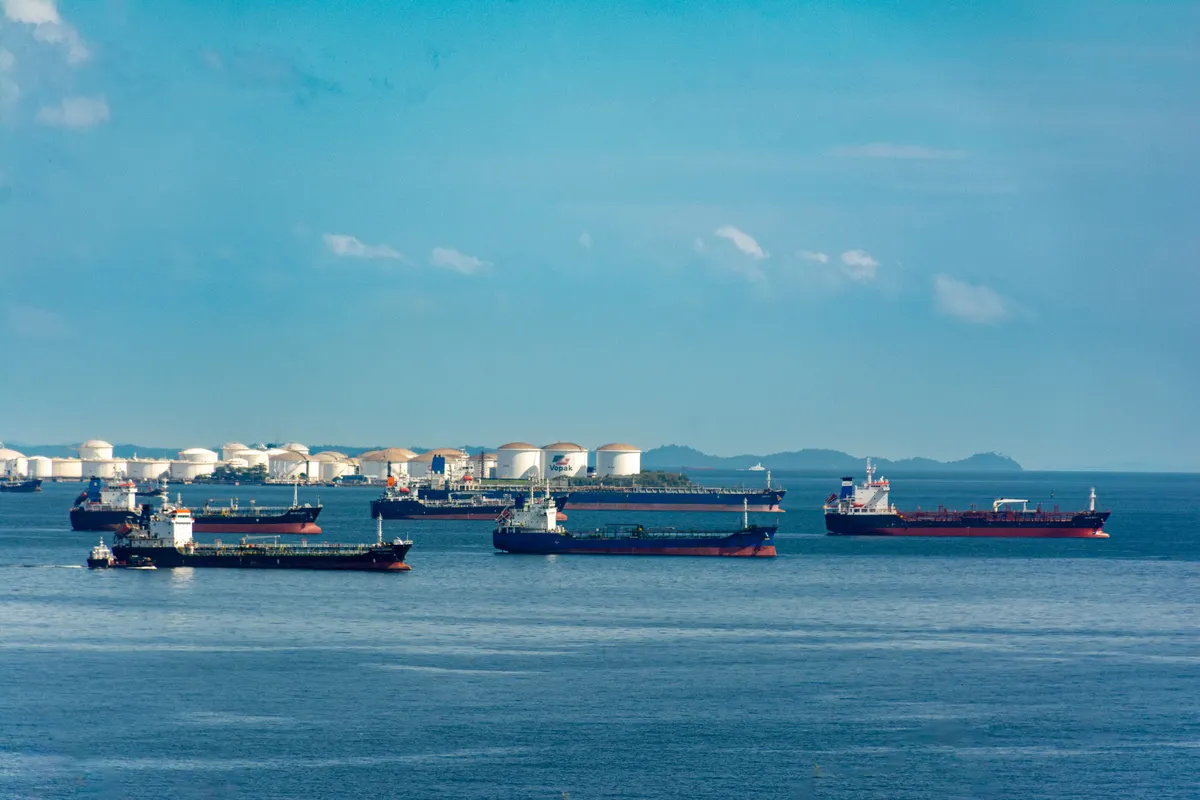
    Washington could also expand its naval pressure on Iran’s so-called shadow fleet, targeting not just individual vessels but also the companies, terminals and infrastructure that enable those shipments.

    Officials could combine several of these measures or pursue a different approach altogether. The administration has not yet indicated which, if any, it will adopt.

    Post Views: 4
    Follow on Google News Follow on Facebook Follow on X (Twitter)
    Share. Facebook Twitter LinkedIn Tumblr Email Reddit WhatsApp Copy Link
    Previous ArticleSpaventa Group boiler room fraud netted $74m from 800 retail investors, SEC alleges
    Philip Marchetti

    Philip Marchetti spent a decade in broadcast journalism before moving to print and digital. He started as a researcher at a regional TV newsroom, worked his way onto the news desk, and spent five years producing packages on everything from council corruption to factory closures across the Midlands. He went freelance in 2019 and started writing because he missed the reporting and did not miss the rota. He covers UK politics, public services, and the slow-moving institutional stories that only make the front page when something breaks. Philip lives in Nottingham. He reads select committee transcripts the way other people read thrillers, and finds them roughly as plausible.

    Related Posts

    By Philip Marchetti17/08/2026

    Spaventa Group boiler room fraud netted $74m from 800 retail investors, SEC alleges

    By Philip Marchetti16/08/2026

    Quantum crypto migration risk looms over $2 trillion in digital assets

    By Philip Marchetti16/08/2026

    Lawsuits and apps: the fight over Meta Ray-Ban glasses privacy

    Top Stories

    Bessent Iran economic isolation: the tools, the risks and the China problem

    17/08/2026

    Spaventa Group boiler room fraud netted $74m from 800 retail investors, SEC alleges

    17/08/2026

    Quantum crypto migration risk looms over $2 trillion in digital assets

    16/08/2026

    Lawsuits and apps: the fight over Meta Ray-Ban glasses privacy

    16/08/2026
    Topics
    • Accessories
    • Adventure
    • Aerospace & Defence
    • Animal
    • Animals & Pets
    • Art & Culture
    • Automotive
    • Awards
    • Banking
    • Books & Publishing
    • Business
    • Business & Retail
    • Career
    • Charity
    • Community
    • Culture & Art
    • Cybersecurity
    • Defence
    • Design & Innovation.
    • Economics
    • Economy
    • Education
    • Electronics
    • Employment
    • Energy
    • Entertainment
    • Environment
    • Event
    • Events & Festivals
    • Fashion
    • Fashion & Beauty
    • Featured
    • Festivals
    • Finance
    • food
    • Food & Beverage
    • Gaming
    • Health
    • Homes & Interiors
    • Hospitality
    • Hotels
    • Housing & Social Care
    • IT
    • Legal and Compliance
    • Lifestyle
    • Marketing & Advertising
    • Media
    • News
    • Pets
    • Property
    • Real Estate
    • Research & Development
    • Retail
    • social
    • Society & Culture
    • Sports
    • sustainability
    • Technology
    • Trade
    • Transport
    • Travel
    • UK Politics
    • Vehicle
    • Weather & Climate
    • Wildlife
    • World
    Facebook X (Twitter) LinkedIn
    • Home
    • About
    • Meet the Daily News Team
    • Contact
    • Terms and Conditions
    • Privacy Policy
    © 2026 dailyNews.

    Type above and press Enter to search. Press Esc to cancel.