


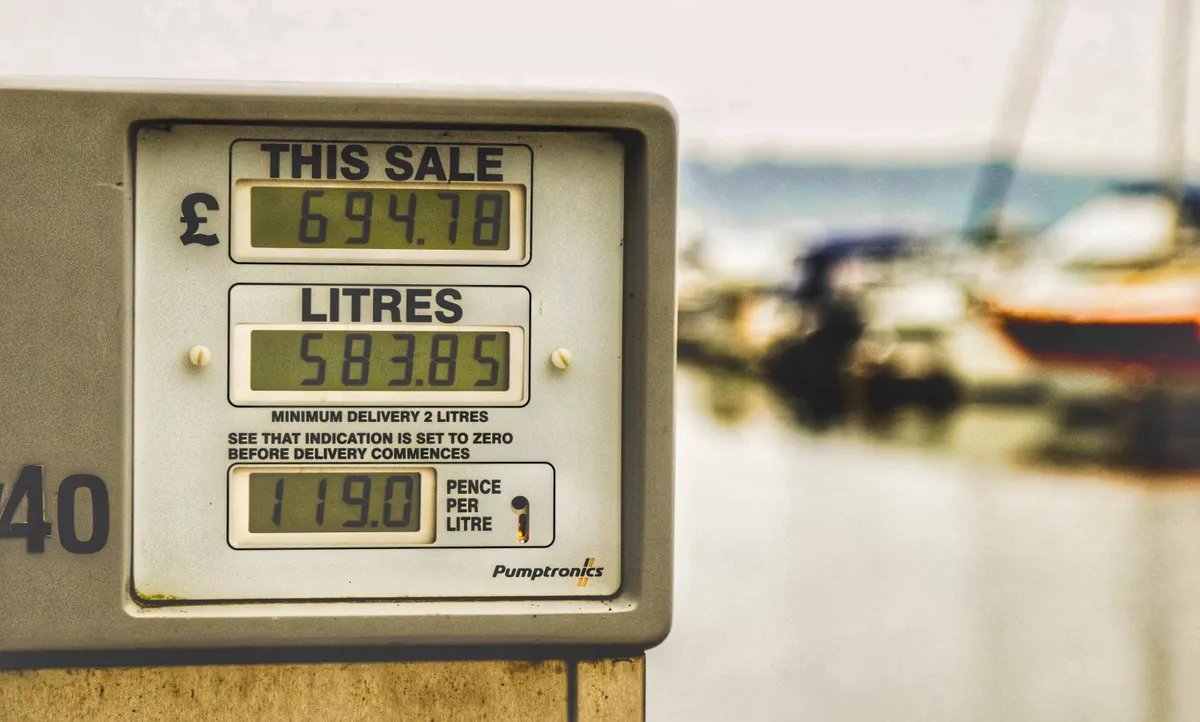
The California diesel prices crisis has pushed a small number of filling stations to the physical limit of their pump displays, with GasBuddy confirming retail diesel sold at $9.999 per gallon in the San Diego suburb of Serra Mesa.
The fuel-tracking firm reported Thursday that California’s statewide diesel average has reached $7.91 per gallon, while the US national average crossed $6 per gallon this week for the first time on record.
GasBuddy said it was investigating further reports of $9.999 pricing at other California locations. Patrick De Haan, head of petroleum analysis at GasBuddy, cautioned that some pumps displaying the maximum figure may simply be out of fuel, as it is common practice for stations to show $9.999 to deter drivers when diesel has run dry temporarily.
But De Haan confirmed that several California stations are genuinely pricing above $9 per gallon. The first verified $9.999 reports gave him ‘chills,’ he said, describing it as a realistic pricing outcome for the first time ever.
How far can California diesel prices crisis go?
De Haan said the national diesel average could realistically climb to $7 per gallon in the weeks ahead. ‘There are really no signs of any improvement,’ he told Fortune. ‘There are more signs of escalation. We’re headed in the wrong direction.’
He added that further legal clarification is needed on whether stations could adjust their digital software to move the decimal place and charge above $10 per gallon, or begin pricing by the half gallon.
The highest petrol and diesel prices combined are costing Americans over $700 million more per day versus last year. De Haan said he would not be surprised if that figure rises to a $1 billion daily impact. Petrol prices are painful, he said, ‘but diesel is really going to be the troublesome child.’
Middle East conflict drives the global squeeze
Behind the California diesel prices crisis lies a worldwide supply crunch, driven by military escalations in the Middle East and the effective closure of the Strait of Hormuz.
The global benchmark for oil spiked almost 8% to $109 per barrel, the highest since May. The US average for regular unleaded petrol stood at $4.27 on 10 September, the highest September price ever recorded.
OPEC reported that Saudi Arabia’s oil production in August fell to its lowest output since 1990, at 6.2 million barrels per day, down from pre-war levels of 10 million barrels daily, as Houthi attacks disrupted volumes through the Red Sea. Houthi attacks escalated further this week, with critical Saudi oil pipelines targeted.
According to PBS News, Saudi Arabia has diverted millions of barrels a day of oil exports to Yanbu via an overland pipeline as the war has bottled up the Persian Gulf.
The US Strategic Petroleum Reserve is down to 44-year lows. No equivalent reserve exists for diesel, which powers trucking fleets and underpins the global economy.
The timing is particularly damaging for agriculture, which relies heavily on diesel, with its harvest season typically beginning in September. ‘It’s going to be trickling down the [inflationary] supply chain in the weeks ahead,’ De Haan said.
Susan Bell, senior vice president at Rystad Energy, said the only alternative to a Strait of Hormuz truce is further price rises forcing demand destruction. ‘I hate to say it, but we need prices at the pump to go up higher to encourage consumers to make choices on their energy consumption,’ Bell told Fortune.
Dan Pickering, founder of Pickering Energy Partners, said diesel costs are more concerning right now than crude oil above $100 per barrel. ‘The [global] market is competing for a limited supply of diesel. Prices are quite high and there’s no easy relief valve. Nobody is building new oil refineries,’ Pickering told Fortune.
President Donald Trump said this week he is resigned that the Iran war will continue at least into November, though he argued it will be resolved shortly after the midterm elections.
