


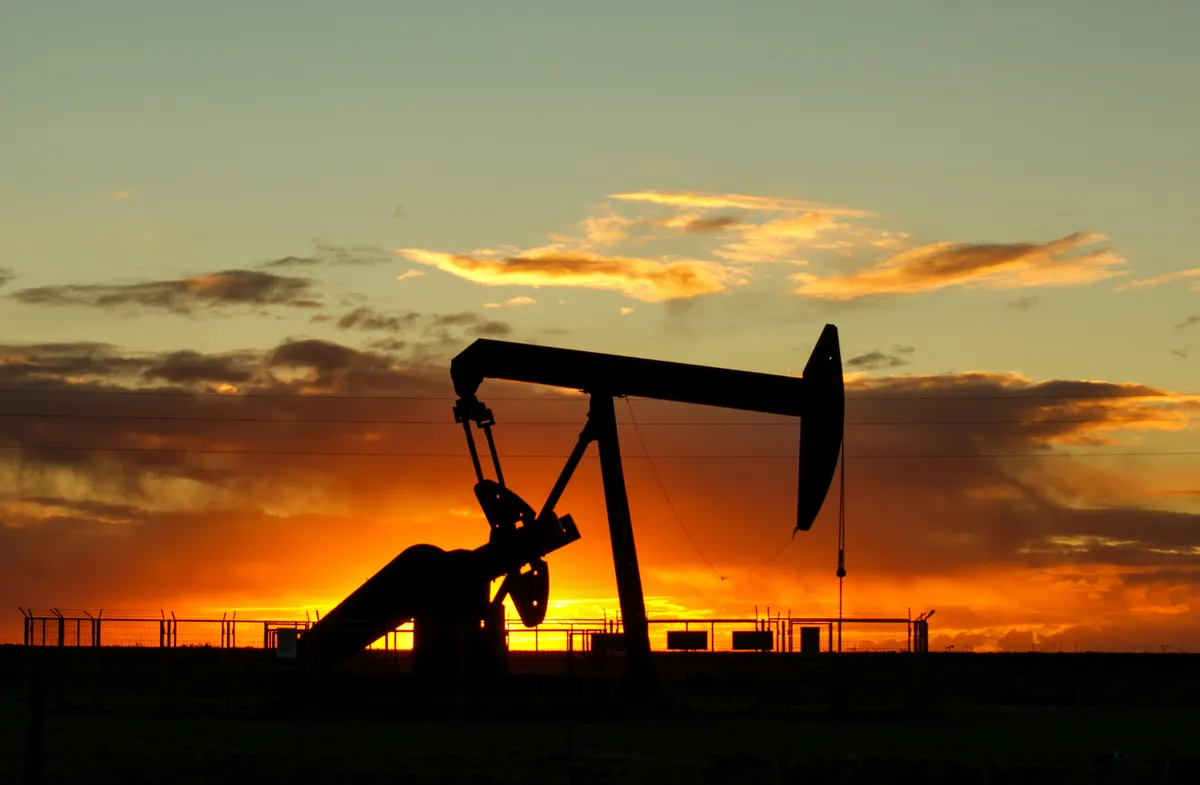
EOG Resources UAE shale ambitions gained fresh detail this week as the Houston producer’s chief executive said Abu Dhabi rock geology closely mirrors South Texas’s Eagle Ford formation, with early wells already outperforming expectations.
Ezra Yacob, EOG’s chairman and chief executive, told a Hart Energy conference in Houston that the company had brought a couple of wells online in the United Arab Emirates. ‘It’s outperforming our expectations right now,’ he said.
EOG Resources Investor Relations filings show the UCO3 concession covers 3,609 square kilometres, or nearly 900,000 acres, in an over-pressured, oil-prone basin within the Al Dhafra region of Abu Dhabi. Following a three-year appraisal phase, EOG may enter a production concession in which Abu Dhabi National Oil Company (ADNOC) has the option to participate.
EOG Resources UAE shale: from Eagle Ford to Al Dhafra
Yacob traced his path to frontier exploration back to 2005, when he left the US Geological Survey as a volcanologist to join EOG’s geoscience team at the start of the shale revolution. ‘It was this real acknowledgment that we’re opening up a new frontier in petroleum exploration,’ he said. ‘That really appealed to me.’
Two decades on, the US shale industry is maturing rather than expanding at pace, and the thrill of a landmark domestic discovery has largely faded. Yacob said international exploration is now ‘probably front of mind for everybody.’
EOG would not have targeted the UAE and Bahrain, he said, without thorough due diligence. ‘Going international is not easy. Going to South Texas, that’s easy.’
Industry rebuilding its wildcatting ‘muscle memory’
Bobby Tudor, founder and chief executive of Artemis Energy Partners, said the shift is broad. ‘I think international exploration is back in the game,’ he said. ‘The desire to look outside the core US conventional business has gone up, and it’s gone up meaningfully.’
Tudor cautioned, however, that two decades of reduced exploration have left the industry out of practice. Many workers ‘have never drilled a dry hole,’ he said. ‘The exploration muscle memory of the US got hollowed out and it got hollowed out pretty badly during the shale revolution. There’s a lot of muscle memory to rebuild in the industry.’
He sees Western Hemisphere activity rising from Alaska to Argentina, with South American governments trending more business-friendly. ‘The pull toward the Americas, especially in light of this war, is actually quite dramatic,’ Tudor said.
Bill Armstrong, 66, the geologist behind Armstrong Oil & Gas, is among those still wildcatting. He has made several discoveries on Alaska’s North Slope, including the Pikka field, and is preparing to drill new wells there. ‘Hardly anyone does what I do anymore,’ he said.
Armstrong described Alaska’s eastern North Slope seismic imagery in blunt terms: ‘It’s like geo-porn. There are tons of opportunities. There is essentially no fracking that’s been done in Alaska.’ He also has his sights on Venezuela and offshore Aruba, noting only one other well has ever been drilled in Aruba’s waters. ‘It is true wildcatting,’ he said.
Shale giants such as ExxonMobil and Chevron never fully retreated from international work, but did cut back sharply on exploration. ConocoPhillips, Occidental Petroleum, APA Corp., Murphy Oil, and Continental Resources are among those now looking again at overseas opportunities, both onshore and offshore.
For Yacob, the appeal has not changed since he first picked up a geological map. ‘You come in with a map and limited data sets, and you come up with an idea of something that’s 2 miles beneath the surface of the earth,’ he said. ‘You basically stick a straw down there and you get to test your idea, and you get pretty instantaneous results. It’s the most thrilling industry I could ever imagine.’
EOG’s three-year appraisal clock on the UCO3 block is now running, with an ADNOC production participation option waiting at the end of it.
