


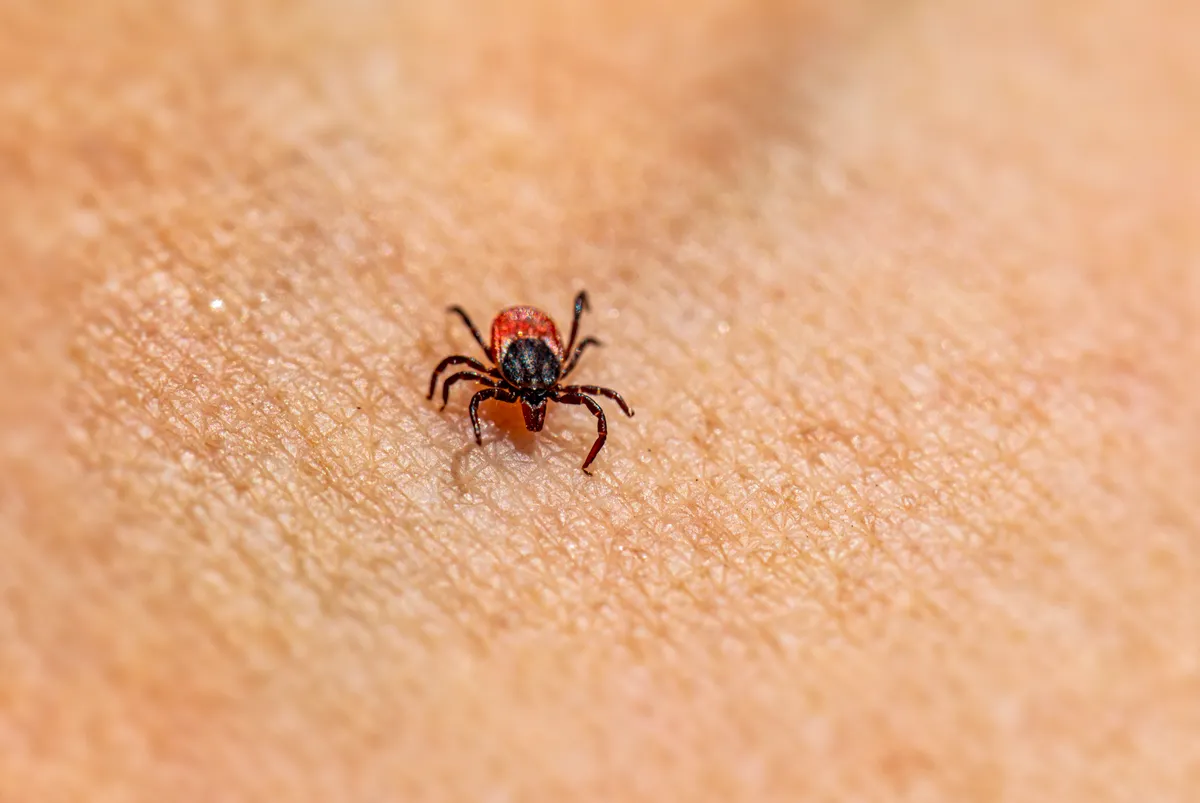
The lone star tick allergy known as alpha-gal syndrome has affected an estimated 450,000 Americans, according to a 2023 study by the Centers for Disease Control and Prevention, and health officials say cases are rising.
The condition causes a life-threatening allergic reaction to red meat and, in some cases, dairy. It does not affect poultry, seafood or eggs.
Alpha-gal is a type of sugar found in most mammal meat. It is also present in tick saliva. When a tick bites through the skin and introduces the sugar directly into the bloodstream, the immune system develops antibodies that later attack alpha-gal molecules in food.
‘It turns out that the skin is a fantastic way to make an allergic response,’ said Dr Scott Commins, an alpha-gal syndrome researcher at the University of North Carolina. ‘If this all happened orally, and we were eating alpha-gal like we do with steaks or barbecue, then we wouldn’t become allergic.’
Symptoms typically appear a few hours after eating meat or dairy and include hives, dizziness, difficulty breathing and swelling of the lips, throat, tongue or eyelids. Some patients experience only digestive problems such as diarrhoea, stomach pain and nausea. Severity can increase over time.
Lone star tick allergy expanding across the US
The lone star tick, often identifiable by a white dot on its back, is the primary source of the condition in the US. It is most common in the eastern and southern states but has been reported in the Great Lakes region and as far north as Martha’s Vineyard in Massachusetts.
Researchers also worry that blacklegged ticks may increasingly spread the syndrome.
Maria Diuk-Wasser, a tick-borne disease researcher at Columbia University, said greater public and medical awareness is partly responsible for rising diagnoses. ‘I think part of it is more people have learned about it and are on the watch for this syndrome,’ she said.
Diagnosis requires both a positive blood test for alpha-gal antibodies and confirmed symptoms. Commins cautioned that blood tests alone are unreliable. ‘You can’t rely on that just for diagnosis. You need the actual symptoms too,’ he said. ‘In the allergy world, we have a lot of trouble with false positives on blood tests.’
Treatment options and the first approved drug
In 2024, the Food and Drug Administration approved Xolair, an injectable drug, for several food allergies including the lone star tick allergy. The drug reduces severe reactions after accidental meat exposure but does not reverse the underlying condition.
Commins said researchers hope biologic drugs that interfere with allergic signalling could offer further options, particularly if administered shortly after a tick bite.
The allergy can fade in some patients. Commins said that occurs in roughly 15% to 20% of his patients, but only if they avoid further tick bites.
For those still managing the condition, doctors advise avoiding beef, pork and lamb. Some patients tolerate dairy; those with severe reactions may need to cut out gelatin-containing products as well. One narrow exception is meat from genetically modified ‘GalSafe’ pigs, approved by the FDA in 2020 and sold by a company called Amaroo Hills.
