


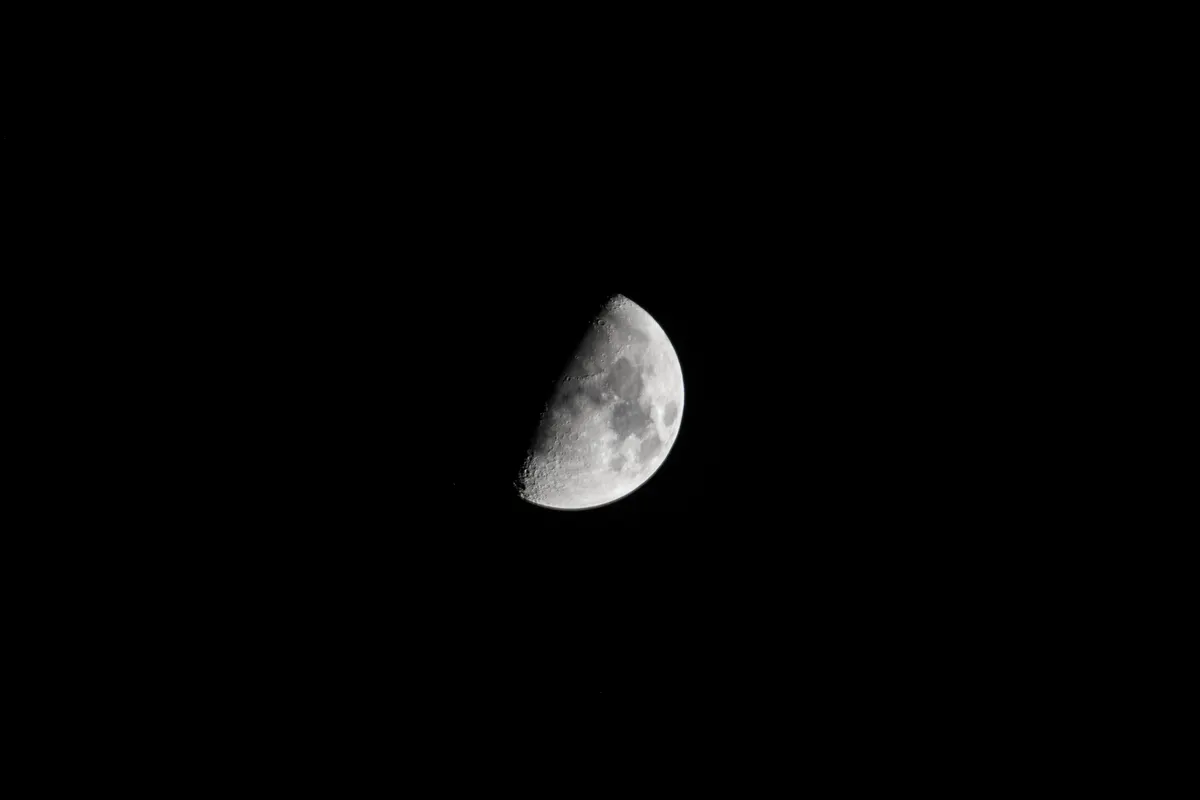
Voyager Technologies founder Dylan Taylor says a moon base by 2030s is a near-certainty, with humans taking up roles in resource mining, orbital data centres and power grid construction on the lunar surface.
Taylor, who became a billionaire when Voyager listed on the New York Stock Exchange last year at a $3.8 billion valuation, told Fortune he believes the timeline is firm.
‘Humans will definitely be living and working in space,’ he said. ‘The next step would be the moon. That’ll happen in the 2030s, probably early 2030s. We’ll have a moon base, people living and working on the moon. You’ll be able to look up at the moon and see lights on the moon.’
Moon Base by 2030s: The Jobs on Offer
Taylor acknowledged that a small number of people already work in space, pointing to the International Space Station, which has had humans on board continuously for 26 years. The challenge, he said, is scaling that from a handful of trained astronauts to the broader population.
He does not believe humanoid robots will replace people in this push. ‘You’re not going to be able to program Optimus to do everything on the moon,’ he said. ‘You’re going to have to have humans to figure it out.’
The infrastructure groundwork is already under way. BigGo Finance reports that NASA has awarded nearly $1 billion in contracts to Blue Origin, Astrolab, Lunar Outpost, and Firefly Aerospace to support lunar development. Firefly Aerospace is planned to build early lunar infrastructure, with near-monthly missions targeted for 2027, according to the same source.
Voyager itself holds multiple NASA contracts and is building the replacement for the International Space Station. Taylor flew to space on a Blue Origin flight in 2021, becoming the 606th human to do so.
Mars Is a Contingency, Not a Destination
Taylor drew a clear line between the moon and Mars. The moon, he said, will become a working environment. Mars is something else: a backup for civilisation in the event of catastrophe.
‘I agree with Elon (Musk) that we want to have some diversification, in case something really bad happens here, an asteroid or something like that,’ he said. ‘The moon really isn’t sufficient diversification. The moon and the Earth are really the same planetary system.’
Radiation and distance make Mars a far harder proposition, he added. He does not expect the majority of people to relocate there. ‘A lot of people don’t want to live on Mars,’ he said, though he counts himself among those who would go. He believes enough people share that impulse to sustain a small colony, while cautioning that terraforming the planet would take a very long time.
Elon Musk has predicted humans could reach Mars as early as 2028, though his previous target of 2024 was not met. Jeff Bezos, founder of Amazon and Blue Origin, said at Italian Tech Week 2025 that by 2045 ‘millions of people’ will be living in space, with robots handling surface work. OpenAI chief Sam Altman has said college graduates will hold ‘completely new, exciting, super well-paid’ jobs in space within a decade.
Taylor’s own trajectory lends weight to the argument. He made his first millions before 30, ran companies across electronics, finance, banking and real estate, then restarted at 37 to pursue a career in space. He became an angel investor in Space Adventures in 2007 and an early backer of Relativity Space. In 2017 he founded Space For Humanity, a nonprofit aimed at purchasing commercial spaceflight seats for people without typical access, before founding Voyager two years later.
Fortune reviewed a summary of his financial records, confirming his billionaire status, reached at age 53.
