


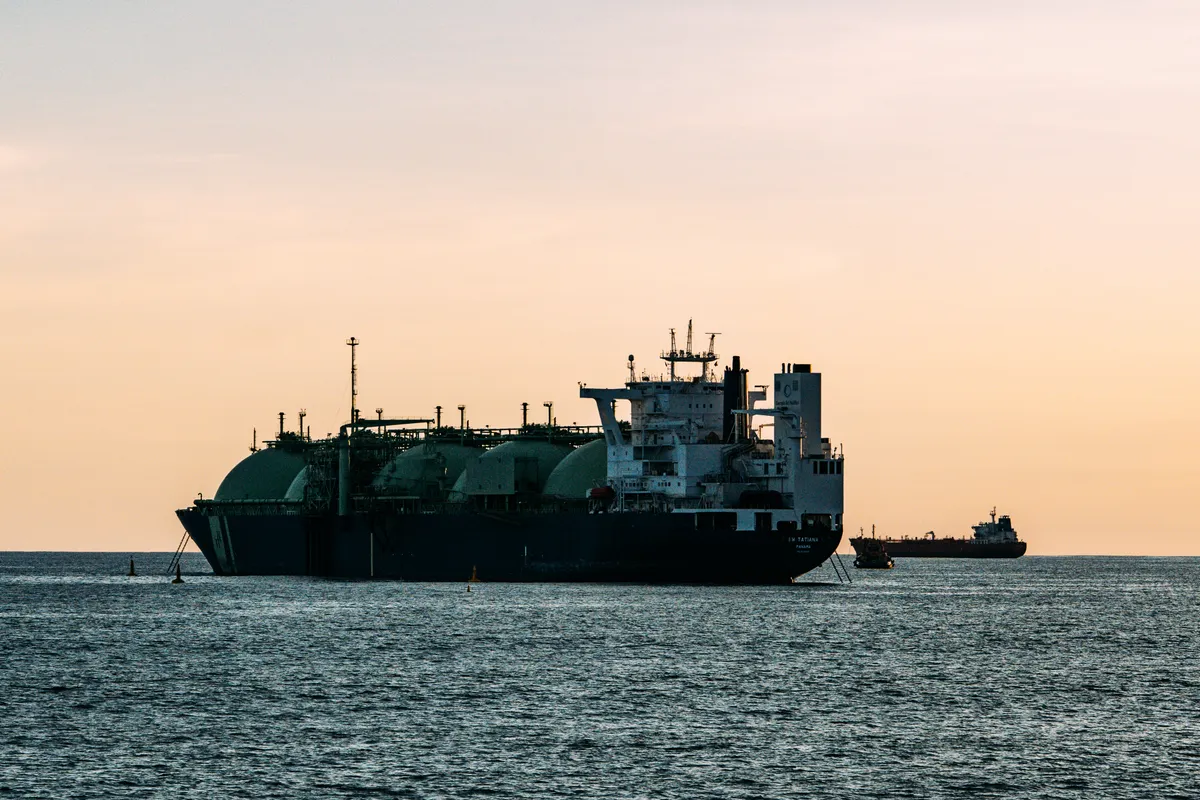
Strait of Hormuz oil flows are running at close to 9 million barrels per day, the Trump administration says, despite Iran’s claims that it has sealed the critical chokepoint to shipping.
Energy Secretary Chris Wright said the seven-day average for oil leaving the strait had reached almost 9 million barrels per day, crediting the US military and Gulf allies. Writing on X, he added that a further 5 million to 7 million barrels per day were moving via newly upgraded pipelines and export facilities, putting total outflows at roughly 15 million barrels per day.
That is down from the 20 million barrels exported daily before the war.
Dark tankers and ship-to-ship transfers keep Strait of Hormuz oil flows moving
Much of the traffic is invisible to trackers. Tankers have been sailing ‘dark’, with transponders switched off to avoid detection, while ship-to-ship transfers off the Omani coast allow vessels to shuttle oil out and return through the strait repeatedly.
A US official told Axios that about 8 million barrels were quietly exiting the Gulf each night through a southern lane, with US military assistance.
The chokepoint sits at its narrowest just 22 nautical miles wide, according to the Congressional Research Service, giving Iran limited but real ability to threaten vessels. Beyond crude, the waterway handled approximately 19% of the world’s liquefied natural gas trade in 2025, the Congressional Research Service notes, underscoring how much more than oil is at stake.
Iran has continued attacking ships even while claiming the strait is fully shut, because not every dark transit goes undetected.
Analysts and Tehran both contest Washington’s figures
Oil market researcher Rory Johnston estimated that average volumes out of Hormuz peaked at 7 million barrels per day over the past week, lower than the administration’s figure, though he acknowledged the true number could be higher given uncertainty around dark transits. Pipelines were exporting about 4 million barrels per day, he added.
‘Hefty chunk of non-Iranian crude still getting out, unlike the Iranian crude that isn’t,’ Johnston posted on X.
Iraq, which relies heavily on the strait, is among the Gulf producers getting barrels out via dark transits and ship-to-ship transfers.
On the other side, the US naval blockade is preventing Iran from exporting its own oil, cutting off a vital source of revenue. Some officials in Tehran have acknowledged the blockade is causing an economic collapse.
Crude prices have fallen back after spiking when the ceasefire between the US and Iran collapsed and fighting resumed. The oil that is still reaching markets is providing consuming countries some buffer, though global supply remains in deficit and strategic reserves are heading toward critically low levels.
The current standoff developed after the US military began guiding tankers along an alternate route hugging the Omani coast. Iran responded by attacking vessels attempting to bypass its own corridor, reigniting hostilities.
Treasury Secretary Scott Bessent signalled that further pressure is planned. ‘It will be a combination of economic isolation like the world has never seen before, and the continued blockade in the Strait of Hormuz that will keep anything from going in or out of the Iranian ports,’ he told Newsmax, without elaborating on timing or method.
