

Close Menu
Daily NewsDaily News
    Pages
    • Home
    • About
    • Meet the Daily News Team
    • Contact
    • Terms and Conditions
    • Privacy Policy
    Facebook X (Twitter) Instagram
    Facebook X (Twitter)
    Daily NewsDaily News
    Subscribe
    • News
    • Entertainment
    • Finance
    • Health
    • Lifestyle
    • UK Politics
    • Property
    • Technology
    • Travel
    • World
    Daily NewsDaily News
    Home » Latest » Strait of Hormuz oil threat forces Asia to rewire its energy supply chains
    News

    Strait of Hormuz oil threat forces Asia to rewire its energy supply chains

    Philip MarchettiBy Philip Marchetti08/09/20264 Mins Read
    Facebook Twitter Pinterest LinkedIn Tumblr Email Reddit WhatsApp Copy Link
    Strait of Hormuz oil threat
    Share
    Facebook Twitter LinkedIn Pinterest Email Reddit WhatsApp Copy Link

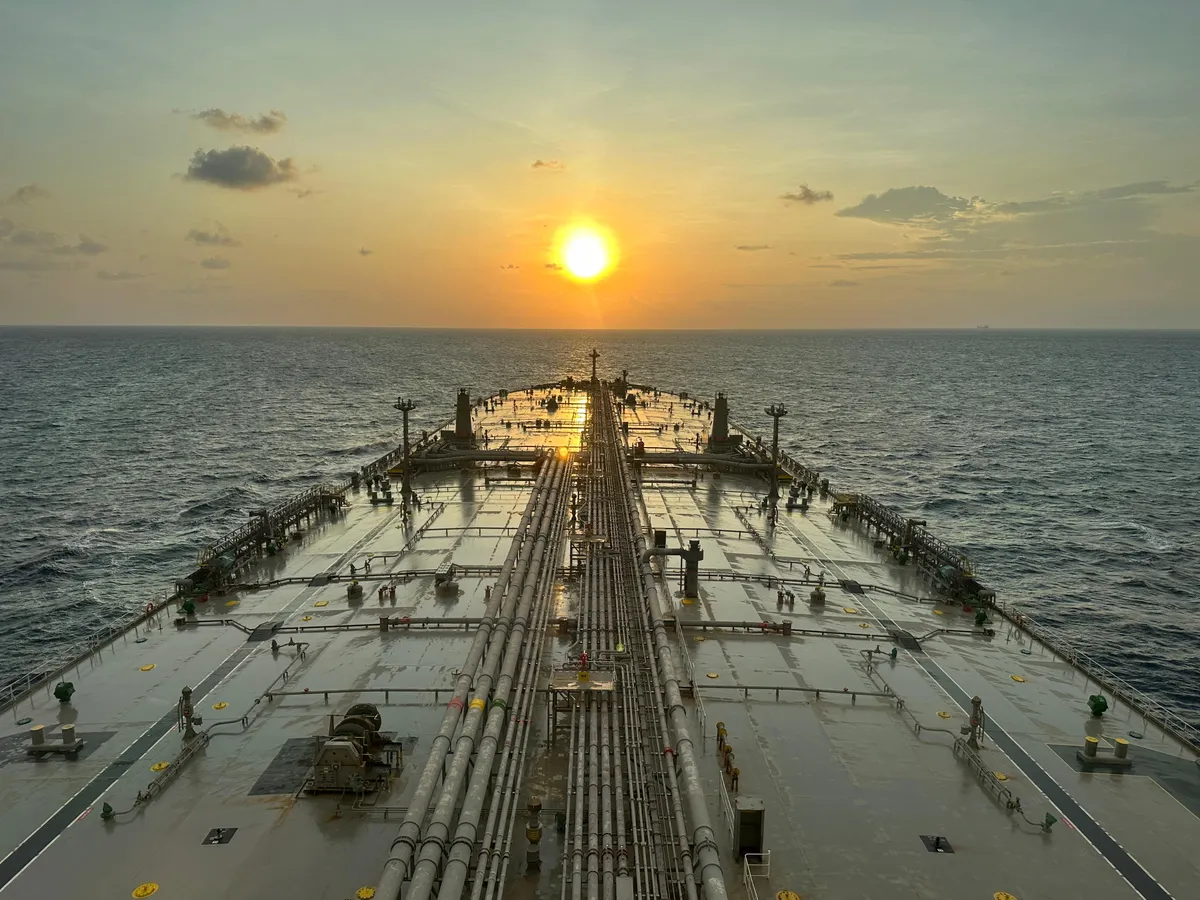
    The Strait of Hormuz oil threat has exposed how deeply dependent Asian economies remain on one of the world’s most vulnerable shipping lanes, pushing governments and energy companies to overhaul supply strategies at speed.

    According to Zero Carbon Analytics, citing US Energy Information Administration estimates, 84% of oil and 83% of LNG shipped through the strait in 2024 went to Asian markets. China, India, Japan and South Korea are the primary destinations.

    Before the conflict, roughly a fifth of all global oil trade passed through the strait, which sits between Iran and Oman. More than 80% of that cargo was bound for Asia.

    Strait of Hormuz oil threat exposes Japan’s structural weakness

    Japan has emerged as one of the most exposed economies. The Middle East accounted for 90% of Japan’s crude oil imports before the war, and roughly 11% of its liquefied natural gas.

    “Japan found it was more vulnerable than expected, particularly when it comes to LNG, it imports 100% of its energy,” said Tim Kavonic, an energy analyst. “In Japan, if the LNG doesn’t arrive, the lights go off and the country shuts down.”

    That vulnerability has a deeper structural cause. After the 2011 Fukushima disaster, Japan shut down its nuclear reactors and leaned harder on fossil fuels. According to Zero Carbon Analytics, the share of fossil fuels in Japan’s electricity grid rose from 64.5% in 2010 to 68.8% in 2024.

    Tokyo is now investing to shore up future supplies. Inpex, Japan’s state-linked oil and gas company, has formed a joint venture to expand LNG investment in Australia’s Northern Territory.

    “It’s boomtime for Woodside and Chevron, two big LNG players who aren’t too concentrated in the Middle East,” Kavonic said. “The oil majors are now also rapidly ramping up their investment in LNG.”

    Producers invest in bypass routes as reliance on the strait falls

    Exporters are also moving. Saudi Arabia and other Gulf producers are ploughing billions into ports on the western side of the Arabian Peninsula and on the Gulf of Oman, building routes that bypass the strait entirely.

    Saudi Arabia’s East-West pipeline is among the projects being expanded. If all the planned investments are completed, only 10% of the world’s oil will need to travel through the Strait of Hormuz, down from 20% before the war.

    Gas presents a harder problem. Unlike crude oil, LNG cannot be moved by pipeline from the Persian Gulf to alternative ports. Qatar, one of the world’s largest LNG producers, has pursued diplomacy, sought new customers, and has set up a fast recovery timeline to restart exports once the strait reopens.

    Carole Nakhle, chief executive of energy consultancy Crystol Energy, said the conflict had demonstrated “how easy and inexpensive it has become to threaten very expensive energy infrastructure,” with relatively cheap drones capable of putting multibillion-dollar refineries, pipelines and ports at risk.

    “This has been the big wake-up call for the entire global energy industry,” Kavonic said. “It’s a fundamental paradigm shift of the last 50 years. We’re moving from just-in-time supply chains to just-in-case supply chains.”

    Stockpiles held the line, but reserves are running low

    A full energy collapse has so far been avoided. Oil prices surged to as high as $126 per barrel but did not reach the $150 to $200 range that some analysts had feared.

    In March, the International Energy Agency coordinated the release of 400 million barrels from emergency stockpiles across its 32 member countries, the largest such intervention in its history. China’s decision to draw on its own huge reserves also left more oil available to other economies.

    “The global market is proving to be more resilient to major supply shocks than many thought,” Kavonic said.

    But that resilience has limits. “We spent the last four months living on the oil market credit card,” Kavonic warned. “And if we continue at that rate, that credit card will be maxed out in a few months.”

    Post Views: 7
    Follow on Google News Follow on Facebook Follow on X (Twitter)
    Share. Facebook Twitter LinkedIn Tumblr Email Reddit WhatsApp Copy Link
    Previous ArticleTürkiye Pairs Polar Science With London Climate Diplomacy Ahead Of COP31
    Philip Marchetti

    Philip Marchetti spent a decade in broadcast journalism before moving to print and digital. He started as a researcher at a regional TV newsroom, worked his way onto the news desk, and spent five years producing packages on everything from council corruption to factory closures across the Midlands. He went freelance in 2019 and started writing because he missed the reporting and did not miss the rota. He covers UK politics, public services, and the slow-moving institutional stories that only make the front page when something breaks. Philip lives in Nottingham. He reads select committee transcripts the way other people read thrillers, and finds them roughly as plausible.

    Related Posts

    By Philip Marchetti07/09/2026

    Flock License Plate Readers Face Bipartisan Backlash Across 23 States

    By Philip Marchetti07/09/2026

    Hope Florida funds misappropriated to fight cannabis ballot measure, grand jury finds

    By Philip Marchetti07/09/2026

    Jensen Huang robot tax rejection puts him at odds with Bill Gates

    Top Stories

    Strait of Hormuz oil threat forces Asia to rewire its energy supply chains

    08/09/2026

    Türkiye Pairs Polar Science With London Climate Diplomacy Ahead Of COP31

    08/09/2026

    Flock License Plate Readers Face Bipartisan Backlash Across 23 States

    07/09/2026

    Hope Florida funds misappropriated to fight cannabis ballot measure, grand jury finds

    07/09/2026
    Topics
    • Accessories
    • Adventure
    • Aerospace & Defence
    • Animal
    • Animals & Pets
    • Art & Culture
    • Automotive
    • Awards
    • Banking
    • Books & Publishing
    • Business
    • Business & Retail
    • Career
    • Charity
    • Community
    • Culture & Art
    • Cybersecurity
    • Defence
    • Design & Innovation.
    • Economics
    • Economy
    • Education
    • Electronics
    • Employment
    • Energy
    • Entertainment
    • Environment
    • Event
    • Events & Festivals
    • Fashion
    • Fashion & Beauty
    • Featured
    • Festivals
    • Finance
    • food
    • Food & Beverage
    • Gaming
    • Health
    • Homes & Interiors
    • Hospitality
    • Hotels
    • Housing & Social Care
    • IT
    • Legal and Compliance
    • Lifestyle
    • Marketing & Advertising
    • Media
    • News
    • Pets
    • Property
    • Real Estate
    • Research & Development
    • Retail
    • social
    • Society & Culture
    • Sports
    • sustainability
    • Technology
    • Trade
    • Transport
    • Travel
    • UK Politics
    • Vehicle
    • Weather & Climate
    • Wildlife
    • World
    Facebook X (Twitter) LinkedIn
    • Home
    • About
    • Meet the Daily News Team
    • Contact
    • Terms and Conditions
    • Privacy Policy
    © 2026 dailyNews.

    Type above and press Enter to search. Press Esc to cancel.