


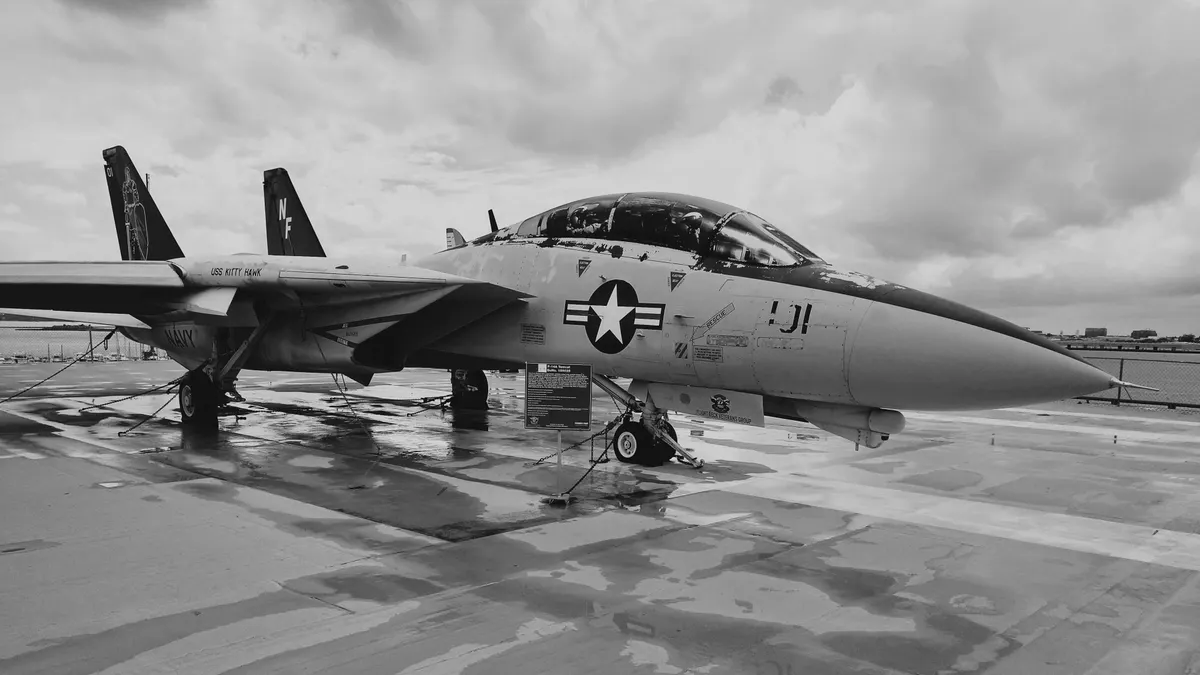
The USS Lincoln deployment crisis deepened on Sunday as the head of US Central Command visited the long-deployed carrier in the Arabian Sea, calling its mission ‘one of the most operationally intense and consequential of the modern era’ amid reports of mental health and supply problems on board.
Admiral Cooper made the assessment of the Lincoln strike group in a statement released on Saturday, after touring the vessel and meeting with civilian and military leaders in Bahrain, Iraq, Israel, Jordan, Saudi Arabia and the United Arab Emirates, according to US Central Command.
USS Lincoln deployment: from Pacific mission to Middle East record
The nuclear-powered carrier left San Diego on 21 November, originally bound for a Pacific deployment, before being redirected to the Middle East, where it arrived in January.
Since then, the Lincoln has logged more than 240 days of uninterrupted time at sea, a record stretch. The ship has been central to the US war against Iran, including a naval blockade of Iranian ports.
Extended deployments of carriers, which can hold more than 5,000 sailors and Marines, have raised concerns about the impact on service members as well as the vessels themselves.
According to NPR, the Navy will move the USS Washington into the region to replace the Lincoln.
Blockade background
The US Navy’s blockade was mounted in response to Iran asserting control over the Strait of Hormuz after the war began on 28 February with US and Israeli strikes. About one-fifth of the world’s traded oil and natural gas passed through the waterway before the conflict started.
Talks between Washington and Tehran have since stalled. Iran is in separate discussions with Oman over how to manage the strait, which runs between them and had been considered an international waterway.
Wider regional picture
Cooper’s tour came against a backdrop of fast-moving developments across the Middle East.
Israel’s military said it struck two Hezbollah commanders in southern Lebanon on Saturday, in what Lebanon’s Health Ministry and state news agency described as the deadliest attacks since a truce between Israel and Iran-backed Hezbollah took effect in June. At least 11 people were killed, those agencies said.
Israel’s military identified one of those killed as Abu Hassan Alaa, described as a ‘senior commander’ for Hezbollah. The other strike killed Ali Samir Al-Haj Hassan, also described as a Hezbollah commander. Israel’s military said his family was with him but was not targeted.
Israel and the Lebanese government announced a ‘framework agreement’ in late June, setting out a plan for Israeli forces to withdraw from southern Lebanon in exchange for Hezbollah’s disarmament. Hezbollah has refused direct talks and was not party to the US-mediated deal.
A Hamas delegation led by the group’s leader Khalil al-Hayya arrived in Cairo on Sunday for Gaza ceasefire talks, Hamas said. Al-Hayya met with the head of Egypt’s intelligence service, Maj. Gen. Hassan Rashad, Egyptian state media reported. Al-Hayya stated Hamas’s commitment to implement US President Donald Trump’s peace plan in Gaza ‘to end the suffering of the residents of the Gaza Strip and to begin the reconstruction process,’ according to al-Qahera News television.
Israeli Prime Minister Benjamin Netanyahu has rejected Trump’s latest ceasefire plan, saying Israel will not withdraw from the roughly 60% of Gaza territory it controls until Hamas is fully disarmed.
Separately, Iran’s Missing Persons Committee of the Armed Forces General Staff said Qatar is holding three Iranian pilots who went missing in March when their jets were downed. Qatar denied the claim. A Qatari foreign ministry spokesperson, Majed Al Ansari, said search and rescue teams had found the remains of one pilot.
The Navy’s plan to move the USS Washington into the region signals an end to the USS Lincoln deployment crisis, though the timing of the relief has not been stated publicly.
