

A Fed Warsh interest rate hike of 0.25 percentage points is expected this week, with futures markets pricing the probability at 88.5% after US inflation held at 3.4%, above the Federal Reserve’s 2% target.
The move would lift the benchmark rate to 3.75%.
CME FedWatch data puts the 88.5% probability well above the 69% threshold the market treats as a near-certainty.
Warsh’s credibility at stake in Fed interest rate hike decision
‘The strongest case for a hike now rests on the Fed preserving its inflation-fighting credibility,’ said Matthew Ryan, head of market strategy at Ebury, by email. ‘Close call or not, standing still may now be the bigger gamble.’
UBS economist Paul Donovan warned that if Fed Chair Kevin Warsh opts not to raise rates (the outcome President Trump would prefer) the Fed risks ‘reawakening accusations of being a “sock puppet”‘. That, Donovan said, would require a risk premium in bond pricing, raising real borrowing costs for both government and the private sector.
Chris Zaccarelli, chief investment officer for Northlight Asset Management, which manages $958 million, cautioned that a rate hike could end the current bull run in equities. ‘Bull markets don’t die of old age, they’re killed by the Fed,’ he wrote in a note to clients.
OpenAI safety rules add pressure as AI chiefs call for slowdown
Markets fell globally amid a separate but connected story: AI company chief executives have signalled support for slowing the development of frontier models, rattling tech stocks in Asia.
OpenAI chief Sam Altman sat down with Fortune editor-in-chief Alyson Shontell to address what he called AI’s ‘high-stakes balancing act’. He said safety standards are ‘not at a place’ to push AI capabilities much further, and confirmed OpenAI’s commitment to halting training runs if safety thresholds are not met.
That commitment carries operational weight. According to Cyber Magazine, OpenAI’s protocols require teams to pause active runs immediately if potential safety violations cannot be confirmed as false positives within 30 minutes.
The same Cyber Magazine report states that, according to OpenAI, the continuous monitoring systems underpinning those rules demand compute overhead roughly equal to 20% of the monitored inference compute, a cost that underscores how seriously the company is treating the safety floor Altman described in the interview.
Altman also said an IPO at this stage would come at an ‘ill-advised moment’ given AI safety concerns, and suggested that a US-China deal on AI development could put both President Trump and Xi Jinping in line for the Nobel Peace Prize.
Gas prices and Senate odds shift against Republicans
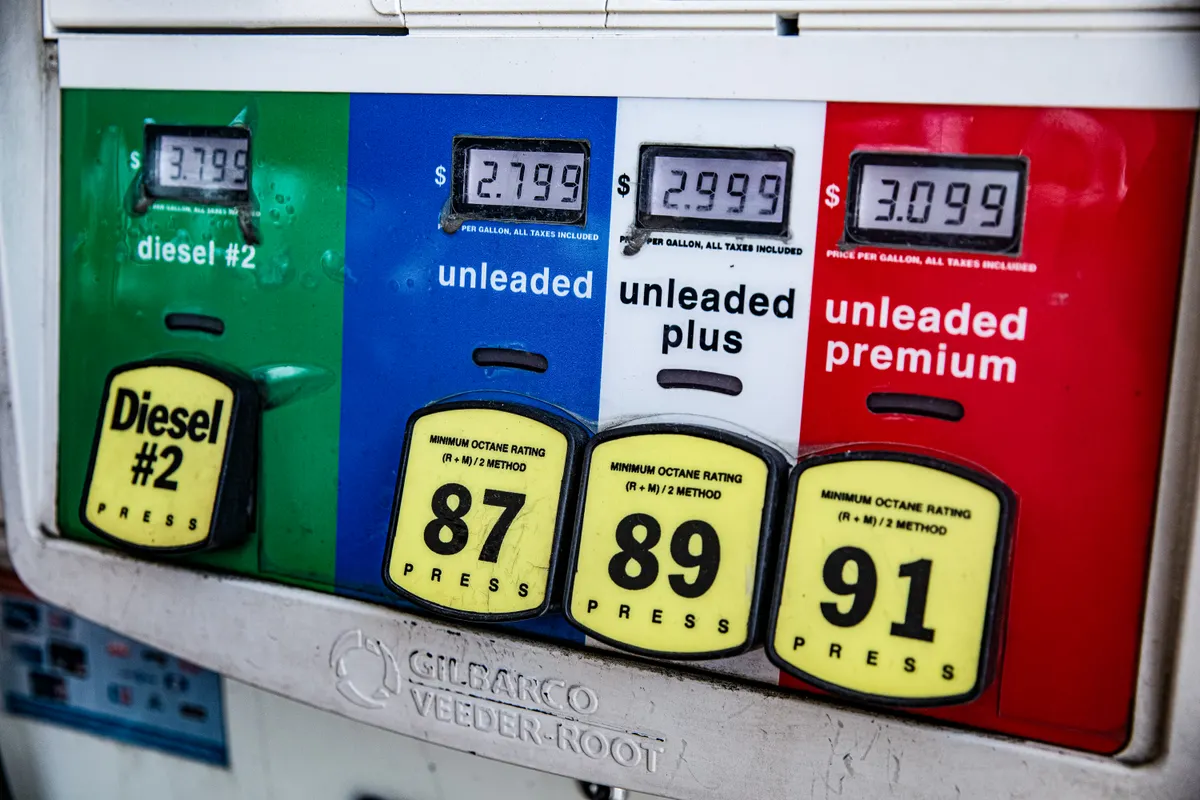
Diesel in the US is at an all-time high of $6 a gallon, and oil is trading at $107 per barrel. Petrol at the pump stands at $4.31 per gallon.
Jared Woodard and colleagues at Bank of America described diesel as ‘the key real-economy pressure point’, citing its knock-on effects for shipping, trucking, agriculture, construction and mining.
Betting markets have shifted. Polymarket now has the Democrats taking the Senate in the midterm elections. Deutsche Bank strategist Jim Reid noted a correlation between Brent crude futures prices and Democratic Party prospects on prediction markets: the higher oil goes, the better the Dems poll.
Despite the pain at the pump, gasoline takes up just 2.5% of disposable income, ‘one of the lowest levels in the past 65 years’, according to Kriti Gupta and Nick Roberts of JP Morgan Private Bank, a figure that may explain why broader consumer spending has held up.
The Fed rate decision is due later this week, with markets braced for the Warsh interest rate hike to land regardless of political pressure from the White House.
