


An Italian blue crab export operation is pulling fishermen back from financial ruin after an invasion of Atlantic blue crabs gutted clam and mussel industries across the Po River Delta and neighbouring lagoons.
The Polesine Fishermen’s Cooperative Consortium, based south of Venice, has sold every crab it has caught so far this year and forecasts 20 million euros in revenue for 2025, most of it from crab sales, after revenues collapsed 75% to 15 million euros across 2024 and 2025.
Active membership of the consortium fell from 1,500 to 850 as livelihoods were destroyed by the crabs, which tore through nets, devoured mollusks and edged out the native green crab, a local soft-shell delicacy.
How the Italian blue crab export trade works
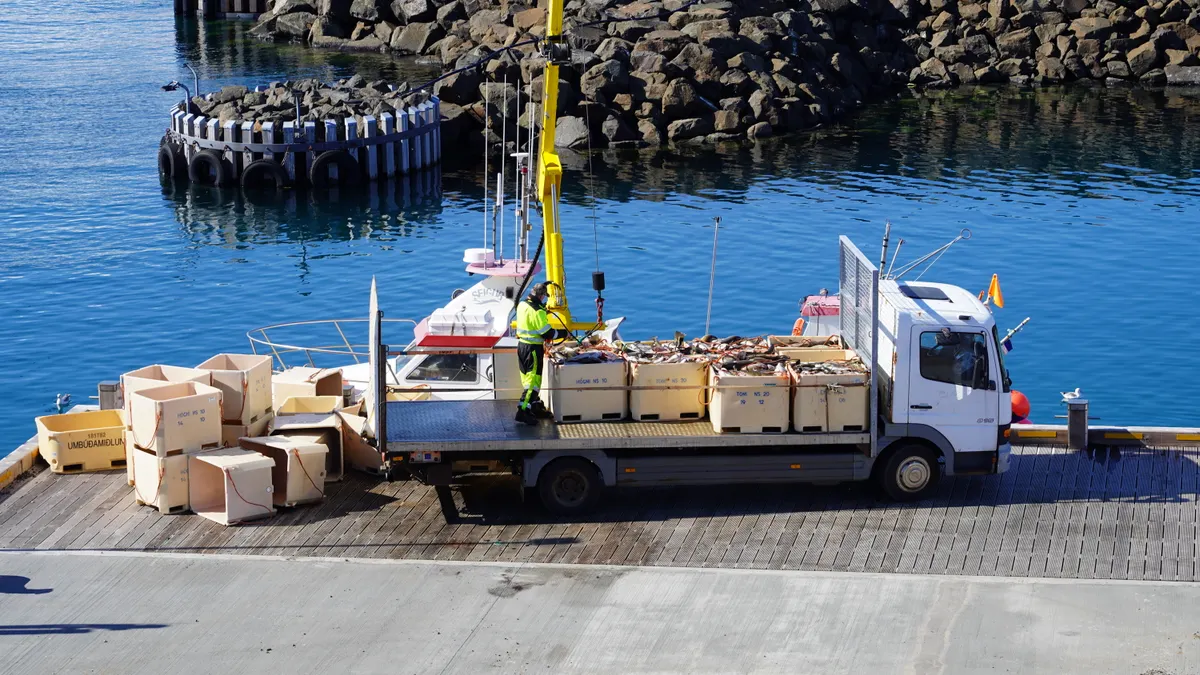
Each morning, fishermen unload crates of live crabs from their vehicles, 100 to 150 kilograms at a time. The crabs are steamed, frozen and packed for shipment abroad.
A joint venture between Sri Lankan company Taprobane Seafoods and the Scardovari consortium processes the catch into claw meat, mixed meat and fillet products. Most is exported onward to international markets, with only a small quantity returning to Italy.
According to Pesceinrete, the consortium has also opened an Italian blue crab export channel to Mexico, broadening its commercial reach beyond Sri Lanka.
Taprobane Seafoods is forecasting large-scale retail expansion in Italy and Europe.
The economics remain painful. Crab fetches just 1.30 euros per kilogram, compared with 10 euros for clams, which once generated 90% of the consortium’s income but now account for just 10%.
“Since we’re going to have to live with these crabs, I hope they become an opportunity,” said Federico Zago, a second-generation fisherman who fishes from a traditional stilt cabin over the Scardovari lagoon. “I hope the market continues to grow.”
Eradication failed, climate change fuelled the surge
The Italian government ran a blue crab eradication programme in 2024, paying the Polesine consortium and fishermen in neighbouring lagoons to catch and incinerate the crabs. Over two years, nearly 2.3 million kilograms of crabs were destroyed. The programme has since been shelved, said Enrico Caterino, the government’s extraordinary commissioner for the blue crab emergency.
Female blue crabs can produce up to 8 million eggs every season, meaning culling made little difference to overall numbers.
The Atlantic blue crab has been present in the Adriatic Sea since at least the 1940s, arriving in ballast water from commercial vessels, according to Piero Genovesi, an invasive species expert at Italy’s environmental protection institute. Numbers stayed low until 2023.
Climate change accelerated the explosion. Higher water temperatures favour reproduction, but drought-driven drops in the Po River’s levels were likely the real trigger, allowing sea water to push into freshwater tributaries and reach the clam and mussel farms that provided ample prey.
“Climate change may therefore have favoured reproduction through both temperature and salinity, because it changed the salinity of the water,” Genovesi said.
Scientists from the University of Bologna released 150,000 baby octopuses into the Adriatic this summer as a biological control measure. Most are not expected to survive. Fishermen and experts alike remain sceptical that predators can keep up with the crab’s reproductive rate.
“If an animal with such high reproductive potential finds suitable environmental conditions, predators may not be able to keep it under control,” Genovesi said.
Changing Italian tastes is proving just as difficult. Blue crab is largely absent from top restaurants around Venice, where the native green crab still dominates, due to the labour involved in processing the invasive species and its poor reputation, according to the FIPE Venice restaurant federation.
Stefania Marchesini, owner and chef at Yogi restaurant in Porto Tolle, has built an all-crab menu featuring fried crab balls, creamed crab on polenta and soft-shell crab. She recently took her dishes to Barcelona’s Alimentaria food fair to build international interest.
“Once people understand how it should be prepared, they will realise it is an excellent product,” she said.
Paolo Mancin, the consortium’s president, says meat processed in Sri Lanka and returning to Italy is central to winning domestic consumers over. Taprobane’s planned retail push into Europe will be the next test of whether the Italian blue crab export model can also rebuild a market at home.
