


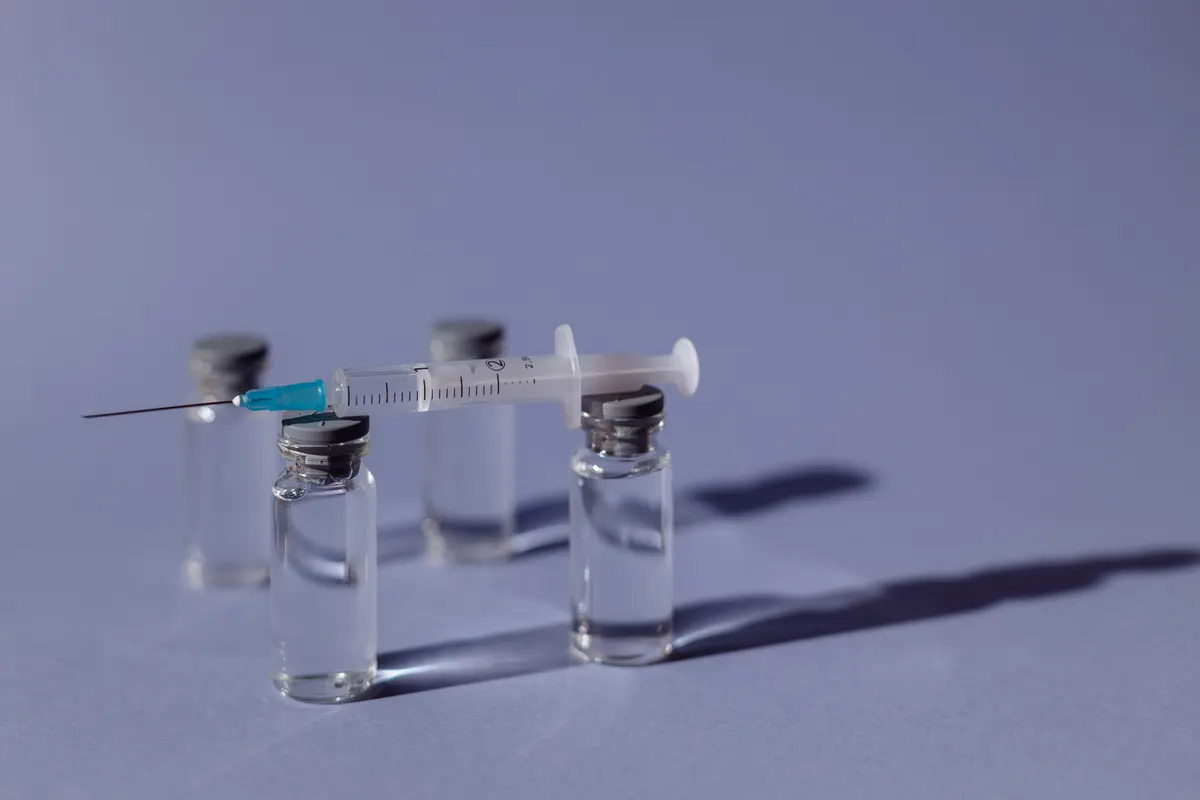
Robert Langer, co-founder of Moderna, has re-entered the billionaires club after a Moderna cancer vaccine trial delivered positive Phase 3 results, sending the biotech’s shares up more than 100% in a single session.
The surge pushed Langer’s net worth to roughly $1.7 billion, according to a Forbes analysis, more than doubling from approximately $730 million the previous day.
Moderna cancer vaccine trial meets key survival endpoints
The catalyst was an announcement that Moderna and pharmaceutical company Merck’s mRNA melanoma vaccine had hit its goals in a Phase 3 trial. Merck and Moderna confirmed the INTERPATH-001 study met its primary endpoint of recurrence-free survival (RFS) and a key secondary endpoint of distant metastasis-free survival (DMFS).
Langer holds roughly a 3% stake in the $56 billion company. That position was valued at just $343 million when Moderna shares hit a low of $29.81 in early January, making the rebound all the more dramatic.
This is the second time the 77-year-old has crossed the billion-dollar threshold. He first entered the billionaires club in November 2020, when Moderna shares surged on promising Phase 3 results for its Covid-19 vaccine. At the peak of the pandemic-era boom, Forbes placed his net worth as high as $4.9 billion in 2021, before a prolonged share-price decline knocked him out of the club.
From 20 rejected job offers to a Moderna cancer vaccine trial breakthrough
Known in scientific circles as the ‘Edison of Medicine’, Langer’s route to billionaire status was far from straightforward. He studied chemical engineering at MIT, where he obtained his doctorate in 1974, and upon graduating was flooded with offers from oil companies eager to hire chemical engineers during a period of acute fuel shortage in the United States.
Nearly all of his peers accepted what Langer described as ‘very high-paying jobs’. He turned down all 20 offers.
‘I just wasn’t excited about the impact that that would have, and I kept looking for ways where I guess I felt I could have more of an impact on the world,’ Langer said in a 2018 interview with Big Think.
He instead joined Judah Folkman’s lab at Boston Children’s Hospital as a postdoctoral researcher, working on polymer matrix systems for delivering large molecules such as proteins into cells. The science was sufficiently novel that it met with scepticism: his first nine grants were rejected and no chemical engineering department would hire him.
‘I ended up going into a nutrition department, but the problem there was that the people in that department didn’t think very much of what I was doing, and they basically told me I should start looking for another job,’ Langer said.
He secured a faculty position at MIT in 1978 and went on to build what became the largest biomedical engineering lab in the world. His most consequential career move came decades later: in 2010, aged in his 60s, he co-founded Moderna.
Langer’s advice: do not give up too easily
Despite his renewed billionaire status, Langer is consistent in urging young workers to value purpose over pay.
‘What you want is somebody to have a great career and be happy,’ he said in the same Big Think interview. ‘My advice to students is don’t do what’s going to make you the most money or the most security, but do something that will make you happy, whatever that is.’
He also cautions against abandoning ambitious goals at the first sign of difficulty.
‘If you give up too easily, that’s not good. Obviously, you don’t want to keep banging your head against the wall forever, so I think there’s some compromises you have to make,’ Langer said. ‘But I think if I gave up on something like that, maybe I’d give up on other things that were important, too. I just don’t know. I’m glad I didn’t.’
Moderna said it plans to present the full INTERPATH-001 data at a forthcoming medical meeting.
