


More than 4,400 current and former SpaceX employees are expected to become millionaires when the rocket company goes public, with some blue-collar workers among those set to collect life-changing sums in what could be one of the largest wealth events in corporate history, the SpaceX IPO employee millionaires story now spans factory floors as well as boardrooms.
The offering aims to raise $75 billion by selling 555.6 million shares at $135 per share, giving SpaceX a total valuation of $1.75 trillion. CNBC reports that valuation would make SpaceX the seventh-biggest company in the United States, above Tesla, which carries a market cap of around $1.6 trillion.
Executives and directors in line for billions
The largest individual gains will flow to senior insiders. Chief Operating Officer Gwynne Shotwell and Chief Financial Officer Bret Johnsen each hold stakes that could reportedly be worth more than $1 billion, according to the Financial Times.
Director Antonio Gracias, founder of Valor Equity Partners, owns shares that could ultimately be worth some $65 billion. Fellow director Luke Nosek has a stake estimated at roughly $5 billion.
Some 400 current and former employees could see their stakes soar above $100 million, according to an analysis by Hill.com first reported by The New York Times.
The biggest beneficiary remains Elon Musk, who owns roughly 43% of SpaceX and is already the world’s richest person with $700 billion to his name. A successful public debut could push his net worth beyond the $1 trillion mark, though the company cautioned that such projections are far from guaranteed.
SpaceX IPO employee millionaires include skilled tradespeople
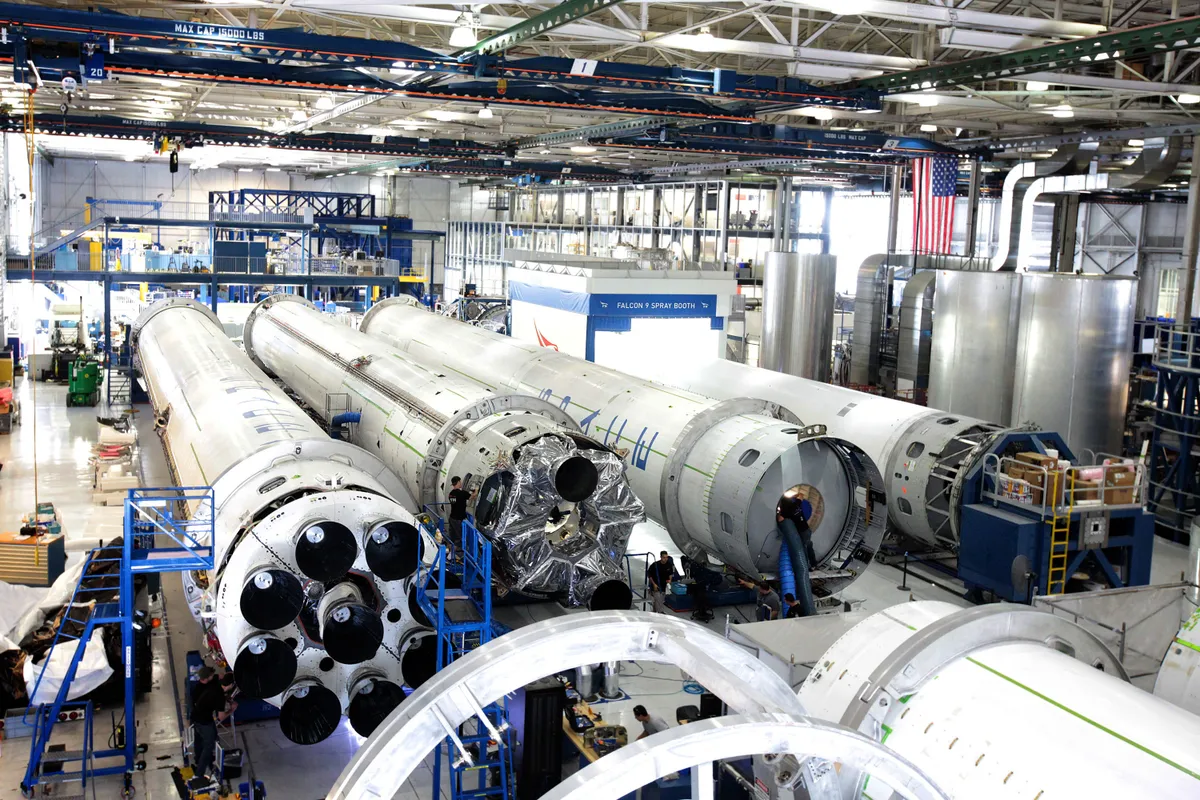
Unlike software-led listings, SpaceX built its operation across factories and launchpads as much as engineering labs, and it handed equity to the workforce that built the hardware.
Juan Hernandez, a former SpaceX welder who joined in 2015 earning $28 an hour, is sitting on shares now worth roughly $880,000 at the anticipated IPO price of $135, according to the Wall Street Journal.
Ruchir Shah, chief executive of Skillcat, an online skilled trades training start-up, said the gains reflect genuine labour scarcity. ‘If you think about it, these are some of the most critical people for SpaceX to grow,’ Shah told Fortune. ‘It’s just as hard to find good welders and good machinists as it is a software developer (if not harder because if there’s a massive shortage) so it makes sense that they were given equity.’
Academics urge caution on the blue-collar equity narrative
Jason Schloetzer, an associate professor of accounting at Georgetown University‘s McDonough School of Business, pushed back on the idea that SpaceX signals a new model for working-class wealth.
‘Nothing that I can see in the filing suggests a novel blue-collar equity model,’ he told Fortune. ‘This is largely venture-backed compensation attached to a company that happens to build rockets.’
Schloetzer said many workers appear to participate through employee stock purchase plans, programmes that let staff buy discounted shares via payroll deductions rather than receiving stock outright. ‘The traditional industrial model paid skilled labour through pensions, profit-sharing, and union-negotiated packages where employers carried much of the uncertainty,’ he said. ‘Equity changes that risk profile.’
Paper wealth also carries practical constraints. Lockup periods can restrict when employees sell, prices can swing sharply after listing, and taxes reduce the final sum. ‘Equity worth millions on paper is not millions in the bank,’ Schloetzer said.
Valuation questions hang over the listing
Not all analysts accept the $135 price. Investment research firm Morningstar valued SpaceX at roughly $63 per share, more than 50% below the anticipated IPO price.
Morningstar equity analyst Nicolas Owens wrote: ‘Even at $63 per share, we give SpaceX a lot of benefit of the doubt in two of the three scenarios, in which we assume the company can achieve a rapidly reusable Starship rocket enabling multiple launches per week and successfully commercialize data centers in space. Neither of these engineering problems has been solved, and we don’t expect them to be until at least 2028.’
Nabil Ahmed, Oxfam America’s senior director of economic justice, warned that any employee windfall would pale against Musk’s own gains. ‘We’re running out of adjectives to describe the frightening scale of wealth concentration that we see in this moment,’ Ahmed told Fortune.
The Morningstar price target of $63 per share sets the clearest near-term benchmark for how far reality may diverge from the $1.75 trillion headline figure.
