


A hotter-than-expected inflation reading has put a Fed rate hike next week firmly back on the table, with traders now pricing an 85% probability of a quarter-point increase at the Federal Open Market Committee’s (FOMC) 15-16 September meeting.
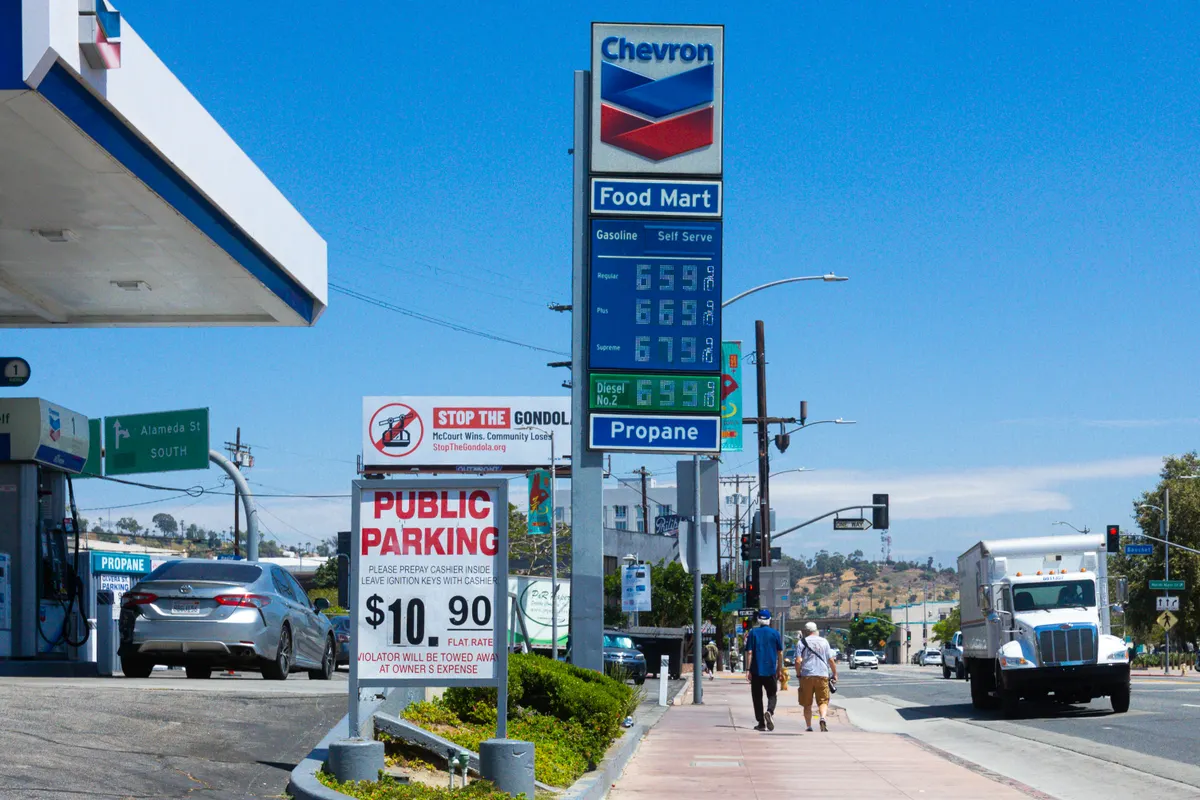
Core consumer prices rose 0.3% in August, above forecasts of 0.2%. Headline CPI climbed 0.4%, with gasoline prices jumping 3.9%.
That probability stood at 70% before Friday’s data landed.
Warsh signals the Fed rate hike next week is live
The ground had already been shifting before Friday’s figures. PBS News reported that Fed Chair Kevin Warsh, speaking at the central bank’s annual economic symposium in Jackson Hole, Wyoming, said inflation had not shown sufficient improvement and that the central bank might have ‘more work to do,’ a sign he was weighing an increase at the September meeting.
That ambiguity left traders searching for clearer direction. Fed Governor Christopher Waller provided it, signalling that ‘it may not take much acceleration in inflation’ to nudge him into supporting a hike. The CPI then cleared that low hurdle.
The Federal Reserve held rates within the 3.50%-3.75% range at its last meeting, according to Yahoo Finance.
‘With a 0.3% month-over-month increase in Core CPI, the Fed now finds itself with its back against the wall,’ said Chris Zaccarelli, chief investment officer at Northlight Asset Management.
Wireless prices drove the core CPI surprise
One category carried an outsized share of the August increase. Wireless telephone services surged 5.9%, the largest monthly gain the Bureau of Labour Statistics has ever recorded for that category.
Cellphone service alone contributed 0.077 percentage point to the overall CPI increase, roughly one-third of core CPI’s total 0.230-point contribution. Strip out that category and core inflation works out to approximately 0.2% rather than 0.3%.
Smartphones were not the driver. Handset prices fell 1.7% in August and 12.2% from a year earlier. The broader telephone-hardware category dropped 2.4% on the month.
Energy remains the bigger structural concern. Oil above $100 a barrel could still feed through to airfares and consumer goods in the months ahead. The 10-year Treasury yield climbed toward 5%, a threshold Adam Turnquist, chief technical strategist at LPL Financial, described as having recently ‘traded the stairs for the elevator.’ A clear break above 5%, he said, would put the 2006-2007 highs of around 5.25% to 5.35% into focus.
Main Street feels the squeeze as markets shrug
Stocks did not sell off on the data. All three major indices moved higher after the release, with markets appearing to welcome the prospect of a hike rather than recoil from it.
For households, the picture is different. Wage growth decelerated for the fifth consecutive month. Consumer sentiment came in at another near-record low on Friday.
‘We haven’t seen this type of income squeeze since 2012,’ said Gregory Daco, chief economist at EY-Parpletheon, writing on X.
The remaining question is whether an AI-powered stock rally can keep absorbing $100 oil, a 10-year yield closing in on 5%, and a central bank that now looks set to resume raising borrowing costs.
As Zaccarelli put it: ‘Bull markets don’t die of old age, they’re killed by the Fed.’
