


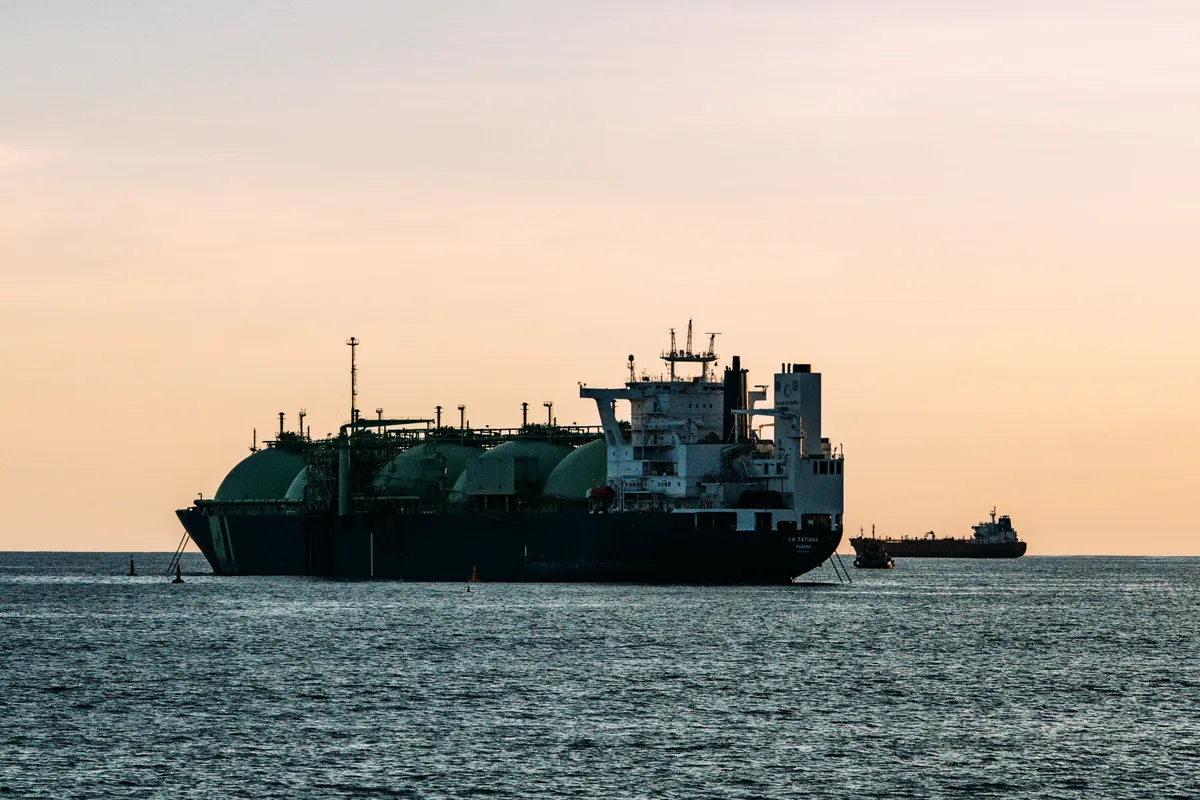
Iran’s warship missile attack on a US Navy aircraft carrier and destroyer has prompted American forces to destroy three Iranian oil tankers, marking what analysts say is a dangerous new threshold in the Gulf conflict.
US Central Command chief Admiral Brad Cooper said the response was deliberate. ‘Let the message to the IRGC be clear: If you shoot at two of our ships, we will impose an even higher economic cost, taking out three of yours,’ he said in a statement. ‘We will not hesitate to defend American forces, and if necessary, destroy Iran’s limited and exposed oil fleet.’
The three tankers struck were deemed to be operating in the ‘shadow network’ that funnels money to Iran’s Islamic Revolutionary Guard Corps (IRGC), according to US Central Command.
Iran warship missile attack crosses a new threshold
Earlier in the week, Iran had launched missiles at US bases around the Persian Gulf. The Iran warship missile attack on Saturday represented a shift: until now, Tehran’s forces had concentrated on commercial shipping around the Strait of Hormuz, while direct strikes on US forces had been confined to land bases in the region.
Hamidreza Azizi, senior Iran analyst at the International Crisis Group, said the move crosses a different threshold. ‘Attempting to strike US warships enforcing the blockade therefore crosses a different threshold,’ he wrote. ‘The attempt failed, but there is no reason to assume the next one will. A successful strike (especially one causing significant US casualties) could rapidly transform the conflict.’
For months, neither side has been able to force a decisive outcome at the Strait of Hormuz. US forces have shepherded oil tankers through the narrow waterway, eroding Iran’s leverage, while Iranian attacks on commercial vessels have prevented a return to normal traffic flows and kept oil prices elevated.
Russia secretly helping Iran build supersonic cruise missiles
The escalation follows reporting that Russia has been covertly assisting Iran in developing supersonic cruise missiles. The Jerusalem Post reported the programme is codenamed C430L, began in 2023, and was arranged by Russia’s state arms exporter, Rosoboronexport, in coordination with the US-sanctioned firm NPO Mashinostroyenia.
Among those involved, according to The Jerusalem Post, were Alexander Dergachev, chief designer for sea-launched missiles and cruise missile complexes; Alexander Chebakov, head of NPO Mashinostroyenia’s design department for air-breathing propulsion units and a specialist in supersonic ramjet propulsion; and Yuri Prokhorchuk, head of the aerodynamics and ballistics department. The engineers made trips to Iran as part of the programme.
A ramjet propulsion system would enable a missile to travel at several times the speed of sound, powering anti-ship and land-attack cruise missiles that would force US Navy vessels and aircraft much farther from Iranian waters, potentially loosening the naval blockade’s grip on Tehran’s economy.
Iranian officials have admitted that economic conditions are dire and suggested time is running out. The US Treasury Department has also vowed to inflict an ‘economic D-Day’ on Iran through wider sanctions targeting countries that facilitate its illicit oil trade.
Azizi cautioned that intensifying economic pressure will not necessarily make Tehran more cautious, particularly if Iranian leaders view the squeeze as unsustainable. ‘The greater the squeeze on Iran, the greater the incentive to act,’ he wrote. ‘And the more Tehran comes to see that pressure as existential, the more likely it is to conclude that it has less to lose, and that increasingly risky actions are worth attempting.’
Cooper’s warning that the US would ‘destroy Iran’s limited and exposed oil fleet’ if attacks on American forces continue sets out Washington’s stated position ahead of any further Iranian missile launches.
